
PURPLE
BASIL
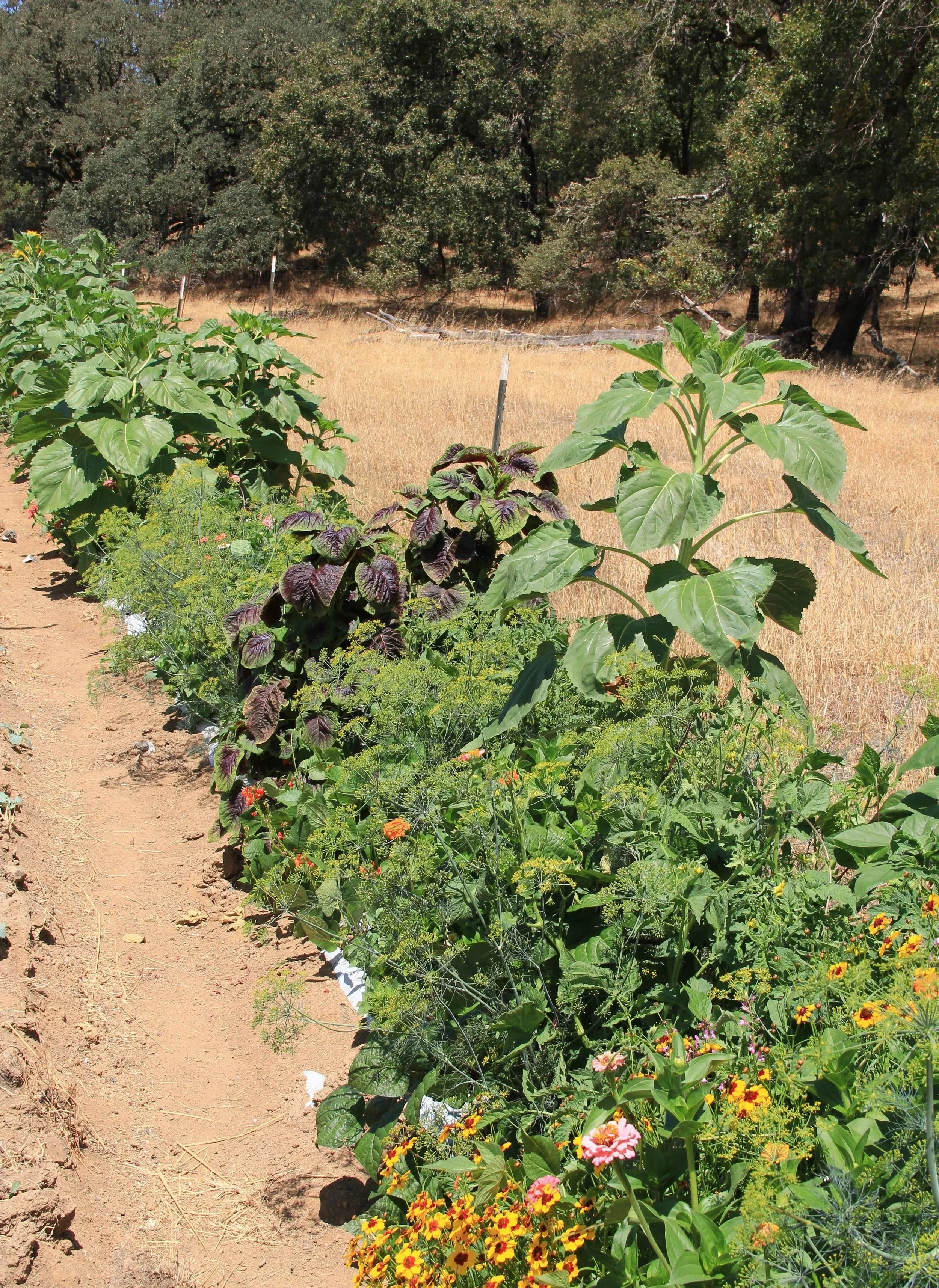
Cover crops and companion plantings offer a wide variety of benefits not only to soil composition and health but also to the plants themselves. Among the mix is a wide variety of sunflowers, marigolds, daisies, zinnias, dill, and calendula (some corn too for good measure!). These plants have been chosen for their specific beneficial properties and to increase diversity in our fields.
As cannabis farmers, we are mono-croppers, and we must try and minimize the effects of this on our environment and the quality of our soil. Luckily there are several tools at our disposal. Primarily is cover-cropping that introduces variety into our crop rotation which provides us with all of the benefits of increased organic matter, reduced compaction, and greater overall nutrient retention.
Secondly is the use of ruminant grazing. This year it was cows, which adds a natural fertilizer to our gardens and increases the microbiological diversity of the soil. Not only does rotational grazing benefit our particular patch of land, but across the property they help to eliminate invasive grasses and promote the abundance of native plant species by giving them a leg-up against other plant species that might choke them out. This leads to greater biodiversity and more opportunities to support overall pollinator populations.
Then lastly is companion plantings. These specific plants lend unique properties to our gardens and also help cut back on the redundancy of row after row of big beautiful cannabis buds and help us to fight off nasty pests that would traditionally be blasted with chemical and systemic pesticides under traditional farming methods.
All of these plants work in cohesion to create an environment that is favorable to growing “clean” cannabis products.

HOW TO GROW
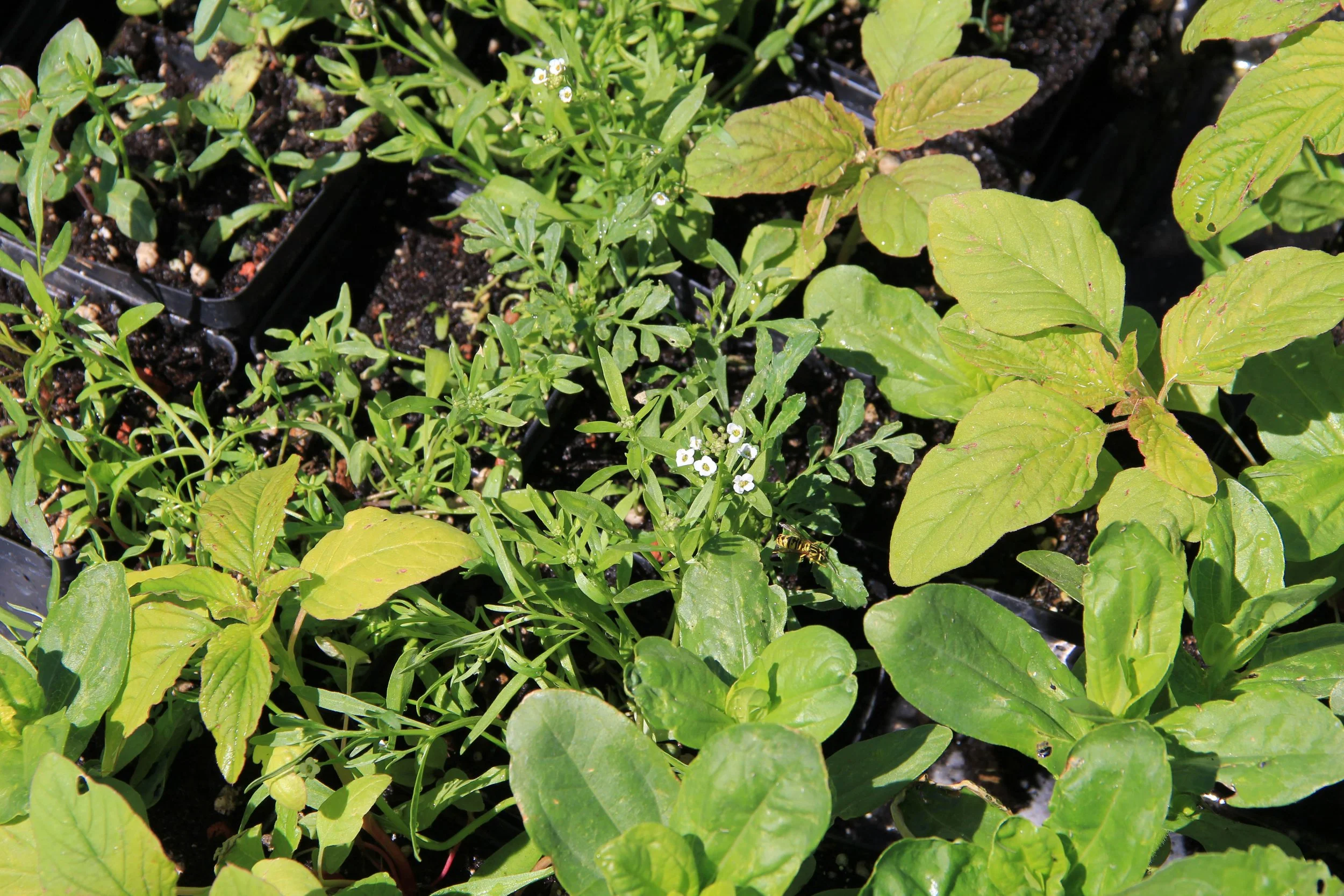
Purple Basil is a burst of color in our garden, and draws the attention of pollinators and people alike. They exhibit the same anti-pest benefits as the Marigolds we grow, through attracting beneficial insects that feed on the beetles and aphids that can damage cannabis crops.
This strain of basil has many uses, including: floral arrangements, essential oils, and a sweet herby flavor when added to dishes.
Basil thrives best in moist soil, either outdoors in direct-light, or in pots on a sunny windowsill. Plant seeds 1/2” deep and 4-6” apart if outdoors. Water when the top 1” of soil is dry or leaves start to wilt, to avoid overwatering and diluting their flavor. When mature, pluck leaves when needed, instead of storing all the leaves in the fridge.