The Importance of Ruminants
Currently as I write this we are having a warm, sunny break in a short spell of rain before a large storm is set to hit the Mendocino County area. We have been spending the past week buttoning up a few major mid-winter projects in anticipation of the first weed plants of our spring cycle arriving (clones) and the major task of pruning our olive orchard and vineyard. But busy in their own right are the flock of Jacob’s and Churro sheep we keep at our home ranch, all of which are set to lamb here in the next few weeks. They have been the beneficiaries of an abundance of fresh protein rich grass that has been in constant cycle all winter- not always a guarantee in our climate- and are quite large at the moment, hoping for lots of twins!
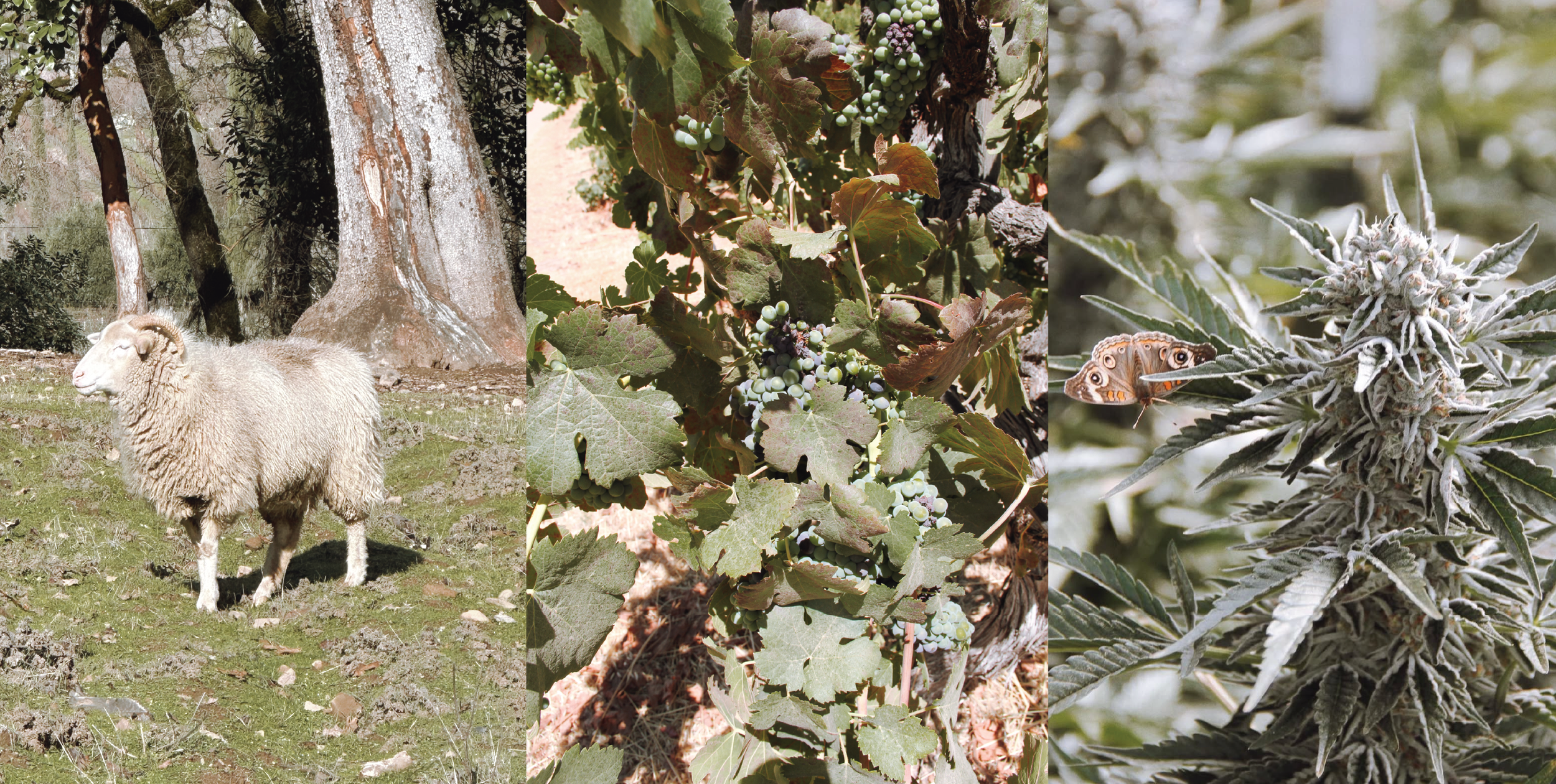
Sheep, wine grape vines, and cannabis are a few of the beings we are lucky enough to foster on our ranch and farms.
We don’t talk about it often- But nestled at the foot of our Eagle Point farms lays the Sterling Vineyard where we farm old vine Chenin Blanc, Zinfandel, and Cabernet Sauvignon. Pruning is in the process of being completed and shortly after lambing we will be bringing in our flock to graze below the vines before we move them up the hill to do the same at our cannabis gardens, once the spring bloom of cover crops has popped. At the moment Eagle Point is being grazed by steers who are better able to cover the 1,000+ acres of grasslands, with our small flock of sheep moving in to graze targeted sections afterwards, mainly the fenced areas around where our gardens will grow.
Typically cover-crops are grazed or mowed down before the plants can go to seed to prevent them from spreading. The roots form dense networks which help increase organic matter, reduce compaction, and increase overall nutrient retention. Besides sequestering carbon and “fixing” nitrogen in the ground, our cover crops are a passive step in improving and maintaining soil health in our gardens. Likewise the ruminants will naturally work the plants into the soil and additionally fertilize it with their waste, which adds a natural fertilizer to our gardens and increases the microbiological diversity of the soil. Not only does rotational grazing benefit our particular patch of land, but across the property they help to eliminate invasive grasses and promote the abundance of native plant species by giving them a leg-up against other plant species that might choke them out. This leads to greater biodiversity and more opportunities to support overall pollinator populations. Healthy and robust soils are the first step in producing the full-spectrum terpene profiles that set sun grown apart from the rest!
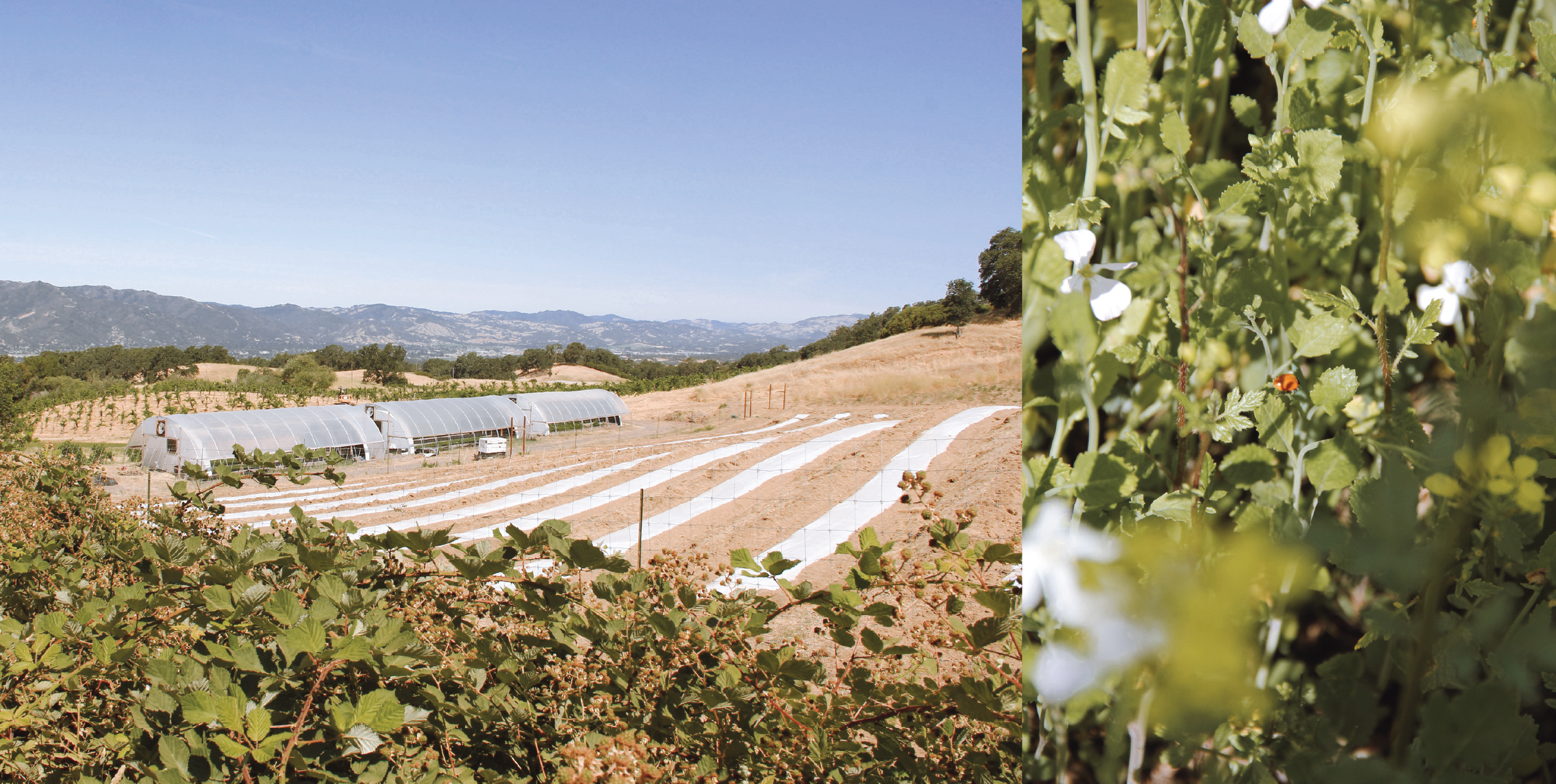
Spring time snapshot- from cover crops to prepped beds ready for planting.
Once the sheep are out of the gardens we will soil test, and follow the results down a trail to planting in the June that is usually lined with bed prep, mulching, companion plantings and excitement to the start of another outdoor season!
Sustainable farming is a year round endeavor that requires many symbiotic relationships between plant, animal, insect, and microbe to function, quite literally spanning the macro to the micro. It is an ever evolving experience that we are endlessly blessed to be apart of.