
DREAD
AMARANTH
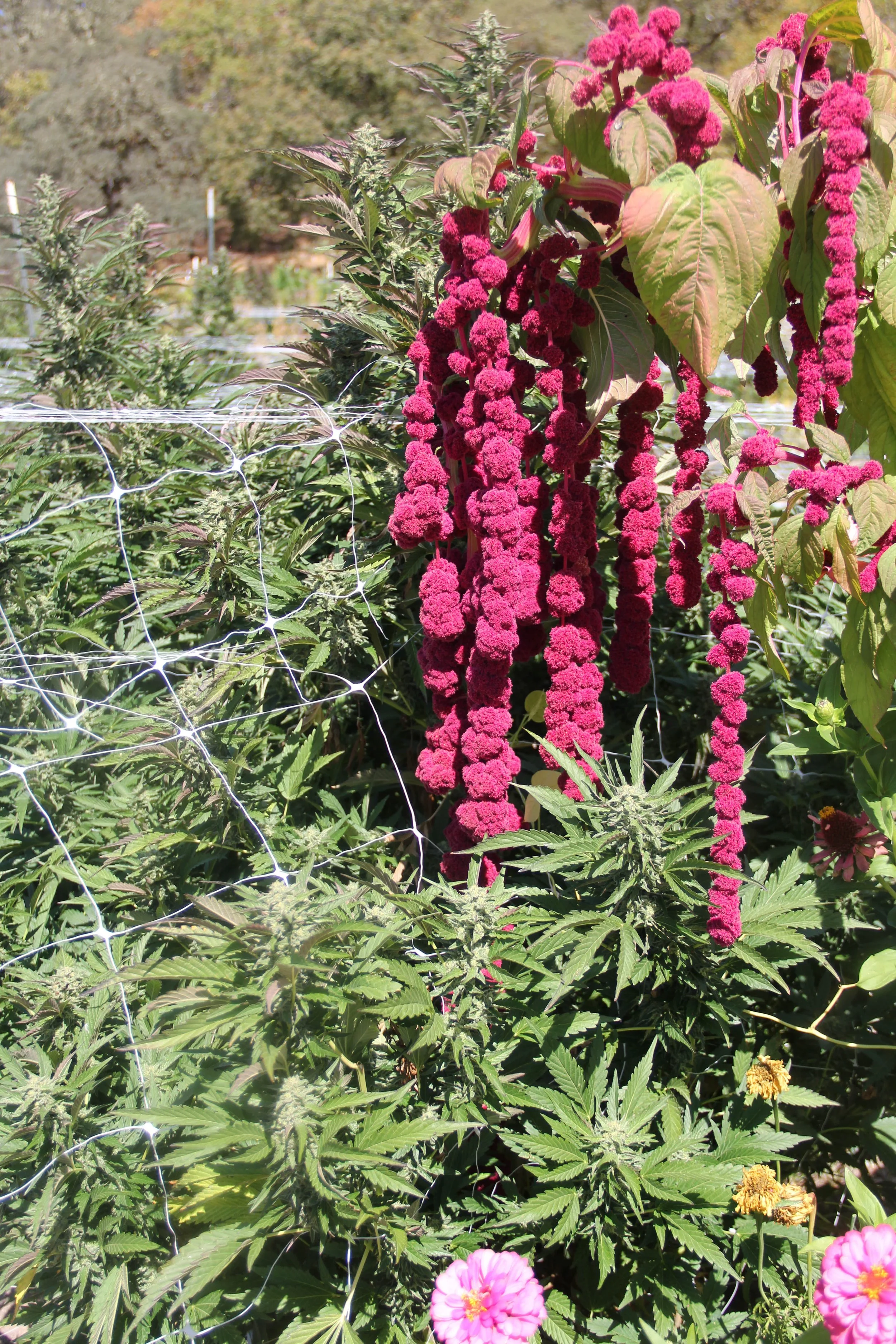
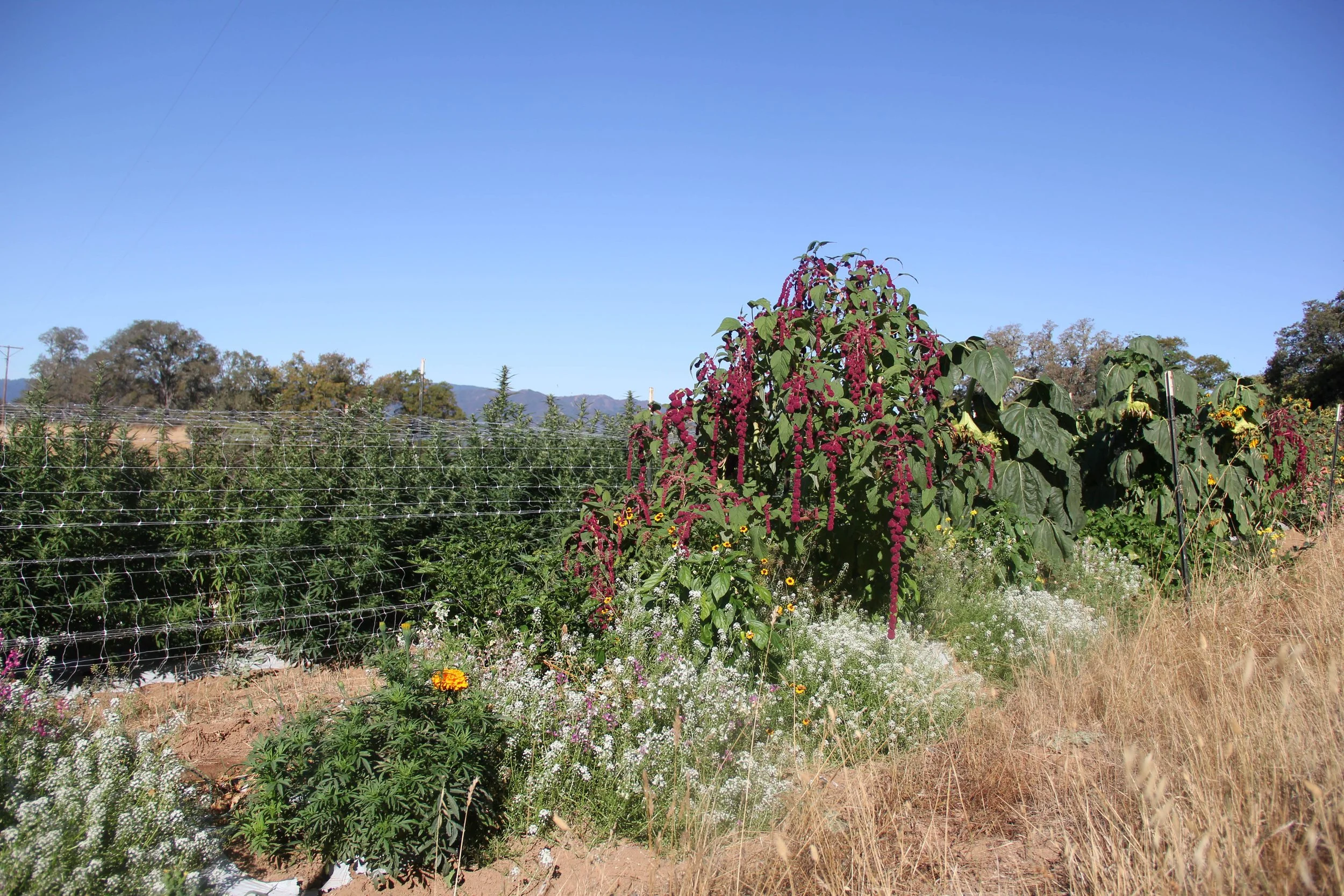
Cover crops and companion plantings offer a wide variety of benefits not only to soil composition and health but also to the plants themselves. Among the mix is a wide variety of sunflowers, marigolds, daisies, zinnias, dill, and calendula (some corn too for good measure!). These plants have been chosen for their specific beneficial properties and to increase diversity in our fields.
As cannabis farmers, we are mono-croppers, and we must try and minimize the effects of this on our environment and the quality of our soil. Luckily there are several tools at our disposal. Primarily is cover-cropping that introduces variety into our crop rotation which provides us with all of the benefits of increased organic matter, reduced compaction, and greater overall nutrient retention.
Secondly is the use of ruminant grazing. This year it was cows, which adds a natural fertilizer to our gardens and increases the microbiological diversity of the soil. Not only does rotational grazing benefit our particular patch of land, but across the property they help to eliminate invasive grasses and promote the abundance of native plant species by giving them a leg-up against other plant species that might choke them out. This leads to greater biodiversity and more opportunities to support overall pollinator populations.
Then lastly is companion plantings. These specific plants lend unique properties to our gardens and also help cut back on the redundancy of row after row of big beautiful cannabis buds and help us to fight off nasty pests that would traditionally be blasted with chemical and systemic pesticides under traditional farming methods.
All of these plants work in cohesion to create an environment that is favorable to growing “clean” cannabis products.
HOW TO GROW
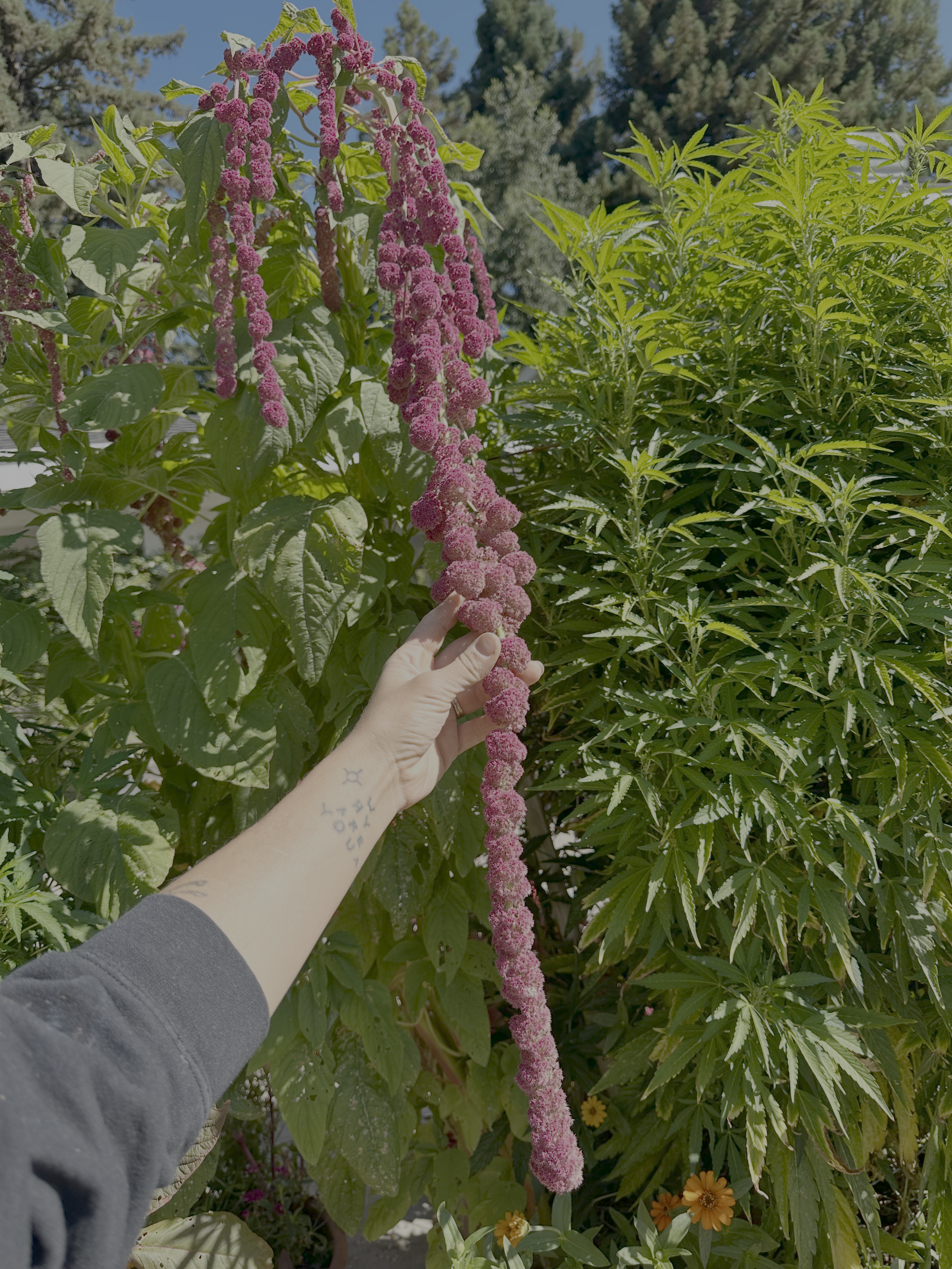
Dream Amaranth is known for its dramatic magenta blooms that grow up to 3ft, drape down like locs of hair. Their bold flowers attract pollinators, and act as a trapping plant for beetles and mites, providing anti-pest benefits.
When young, its leaves are edible and can be sautéed or steamed. Their seeds can be cooked like quinoa or popped like popcorn!
This low-maintenance plant thrives in full sun, and loose soil. Once nighttime temps remain above 55°F, plant seeds directly in soil, 1/8” deep, 10-12” apart. Lightly cover with soil and water regularly. Avoid using too much fertilizer, and enjoy your new beauty!